
9 Offshore Hiring Mistakes That Cost US Businesses Thousands

On this page
- Key Takeaways
- 1. Hiring on Price Alone
- 2. Writing a Vague Brief
- 3. Skipping Structured Vetting
- 4. No Accountability Layer
- 5. Ignoring Data Security
- Mistake vs Fix
- 6. Expecting Full Time Zone Overlap
- 7. Onboarding Like It Is Optional
- 8. One-and-Done Hiring for Recurring Work
- 9. No Free Replacement Path
- The Bottom Line
- Frequently Asked Questions
Offshore hiring gets a bad reputation from a small number of avoidable mistakes. The talent is not the problem. The setup usually is. When businesses get burned, it is almost always one of the same nine errors.
Here are the mistakes that cost US businesses thousands, and how to sidestep each one so your offshore hire becomes one of your best decisions instead of a cautionary tale.
Key Takeaways
- Most offshore failures come from setup mistakes, not from the talent.
- Hiring on price alone is the most common and most expensive error.
- Structured vetting, an accountability layer, and security controls prevent the worst outcomes.
- A free replacement guarantee turns a bad hire from a restart into a minor delay.
1. Hiring on Price Alone
The cheapest hire is rarely the cheapest outcome. A bargain freelancer who needs constant rework costs more than a slightly higher managed rate that delivers reliably. Compare total cost, not headline rate. The Cost Calculator shows the full picture.
2. Writing a Vague Brief
A fuzzy brief attracts fuzzy candidates and guarantees rework. Define the 90-day outcome and the specific tools and metrics before you start. See how to write a remote job description for the exact structure.
3. Skipping Structured Vetting
Hiring off a resume and a 20-minute call is a coin flip. Use skill tests and scenario questions. A managed partner runs structured vetting before you ever see a candidate. See our vetting process.
4. No Accountability Layer
Independent contractors report to themselves. Without a manager or performance process, quality drifts and you have no recourse. A managed engagement adds a Business Success Executive who owns accountability.
5. Ignoring Data Security
Handing account access to an unmonitored freelancer is a real risk. Insist on NDAs, device control, and a secure environment. More on this in our offshore hiring data security guide and on the security page.
Ready to build your offshore team? Tell us what you need and get 3 vetted candidates in 14 days, with no placement fees.
Mistake vs Fix
| Mistake | The fix |
|---|---|
| Hiring on price alone | Compare total cost of ownership |
| Vague brief | Define 90-day outcome and tools |
| No vetting | Use structured skill tests |
| No accountability | Add a managed performance layer |
| No security | NDAs, device control, secure office |
| No replacement path | Choose a replacement guarantee |
6. Expecting Full Time Zone Overlap
Demanding someone be online your entire workday is unrealistic and unnecessary. Set a focused overlap window and run the rest async. See how to manage an offshore team across time zones.
7. Onboarding Like It Is Optional
Throwing a new hire into the deep end wastes their first weeks. A simple 30-60-90 plan with clear early wins pays for itself fast and sets the tone for the whole engagement.
8. One-and-Done Hiring for Recurring Work
Using a churn-prone freelancer model for an ongoing role means restarting every few months and losing institutional knowledge each time. For recurring work, hire a dedicated specialist you can retain.
9. No Free Replacement Path
If a hire does not work out, restarting from zero is the expensive option. Choose an engagement with a replacement guarantee so a bad fit costs days, not months.
The Bottom Line
Offshore hiring rarely fails because of the talent. It fails because of price-first decisions, vague briefs, weak vetting, and no accountability. Fix the setup and offshore becomes one of the highest-return moves a US business can make.
Frequently Asked Questions
What is the single most common offshore hiring mistake?
Hiring on price alone. A low rate that produces rework costs more than a reliable managed hire. Compare total cost in the Cost Calculator.
How do I reduce the risk of a bad offshore hire?
Use structured vetting, add an accountability layer, and choose an engagement with a free replacement guarantee. Talent Surge includes all three.
Is offshore hiring safe for sensitive data?
It is when handled properly. Require NDAs, controlled devices, and a secure office environment. See our data security guide.
Why do offshore hires fail in the first 90 days?
Usually weak onboarding and unclear expectations rather than skill. A simple 30-60-90 plan with early wins prevents most early-stage failures.
Should I hire a freelancer or a dedicated specialist for ongoing work?
For recurring work, hire a dedicated specialist you can retain. Freelancer churn means restarting and losing institutional knowledge every few months.
Avoid all nine at once. Talent Surge handles vetting, security, accountability, and replacements for you. Get started or read why managed beats freelancers.
Take action today
Stop comparing. Start saving.
US businesses save 60-70% vs local hires. Get 3 pre-vetted offshore specialists matched to your exact role delivered in 14 days, free with no commitment.
Keep reading

Why Managed Remote Hiring Beats Freelancers Every Time
Freelancers disappear. Managed remote staff don't. Here's the real difference for US businesses.
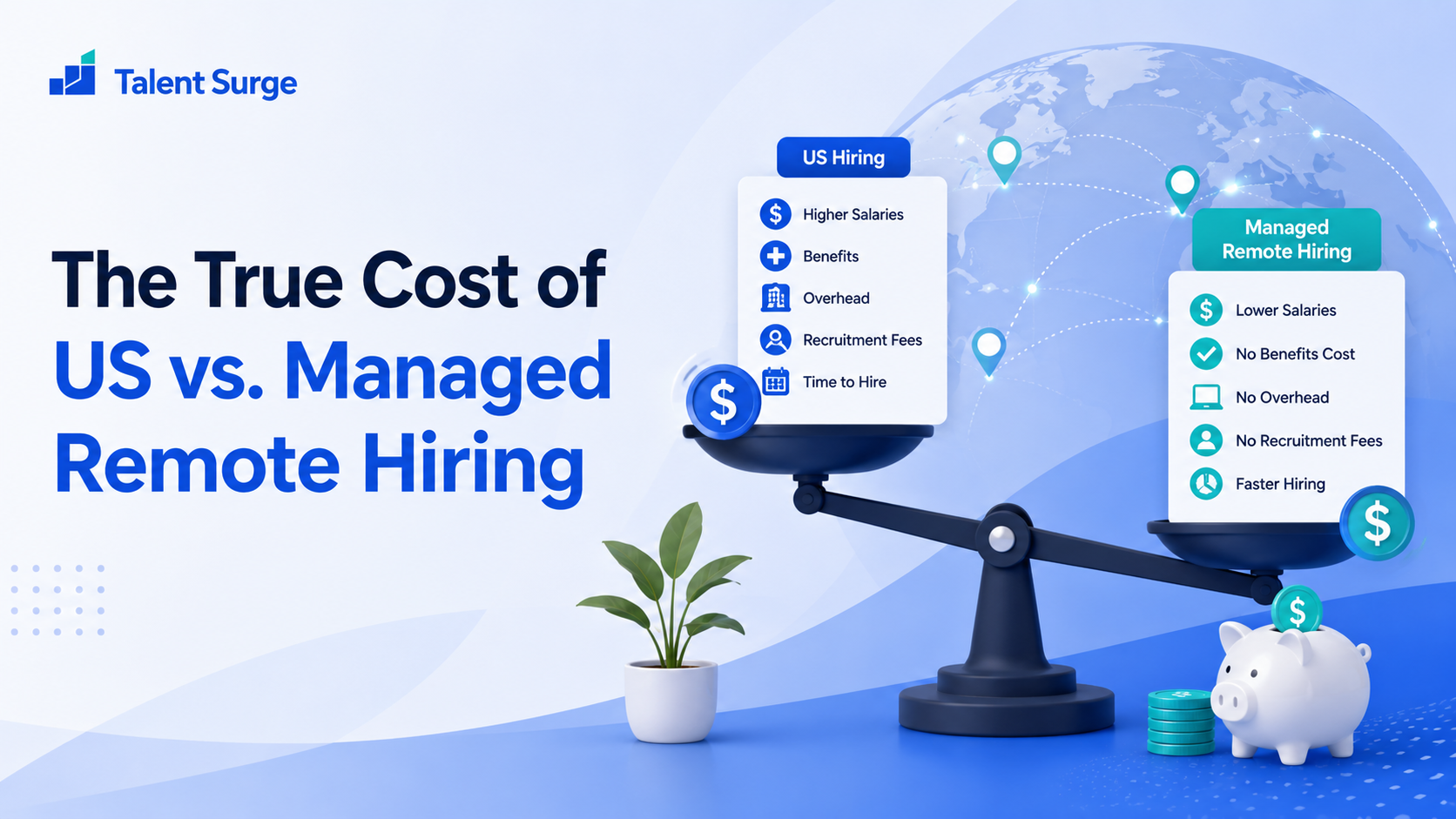
The True Cost of US vs. Managed Remote Hiring
The real cost of a US hire is salary plus benefits, taxes, recruiting, ramp, and management overhead. Here is the full math against a managed remote specialist.
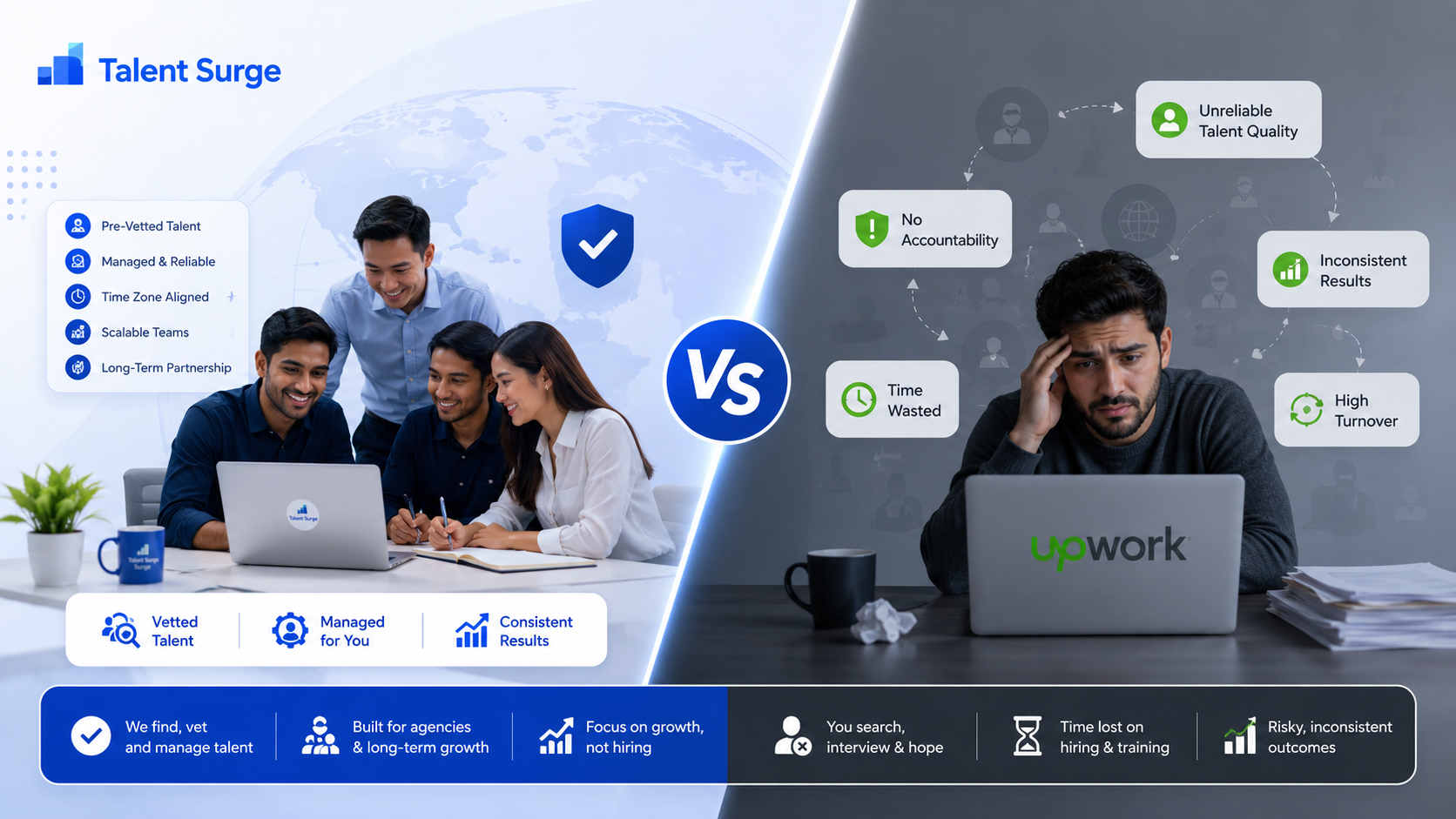
Talent Surge vs. Upwork: Why Agencies Are Switching to Managed Offshore Talent
Upwork is built for sourcing one-off work fast. Talent Surge is built for dedicated, managed specialists who stay. Here is the honest comparison of marketplace freelancers vs managed offshore talent, with cost math, risk, and when each one wins.