
Data Security When Hiring Offshore: What US Businesses Must Know

On this page
Every offshore hire eventually touches something sensitive: customer data, account logins, financial records, or client files. That makes data security a core part of the hiring decision, not an afterthought. The good news is that the controls are well understood and easy to require.
Here is what US businesses must know to hire offshore without exposing their data, and how a managed model builds these protections in by default.
Key Takeaways
- Put a signed NDA and clear data rules in place before granting any access.
- Company-managed devices remove a whole category of personal-device risk.
- Least-privilege access limits the damage of any mistake.
- A supervised office environment is far more controllable than scattered home offices.
Start With an NDA and Clear Data Rules
Before any access is granted, put a signed NDA in place and define what data the person can use, store, and share. Clear rules prevent honest mistakes and give you recourse if something goes wrong.
Control the Device, Not Just the Person
A specialist working on a personal laptop on public wifi is a risk no policy can fully fix. Company-issued, managed devices with disk encryption and security software remove a whole category of exposure. Talent Surge specialists work on company-provided laptops in a controlled office.
Use Least-Privilege Access
Give each person only the access they need for their role, nothing more. Use password managers, role-based permissions, and shared logins only where unavoidable. Review access regularly and revoke it the moment it is no longer needed.
Ready to build your offshore team? Tell us what you need and get 3 vetted candidates in 14 days, with no placement fees.
Security Control Checklist
| Control | Why it matters |
|---|---|
| Signed NDA | Legal protection and clear expectations |
| Managed devices | Removes personal-device risk |
| Least-privilege access | Limits the blast radius of any mistake |
| Multi-factor authentication | Stops most account takeovers |
| Secure office environment | Controlled, supervised, monitored |
| Clean offboarding | No lingering access after departure |
Secure the Tools and the Connection
Beyond devices, lock down the software layer. Require multi-factor authentication on every account, share credentials through a password manager rather than chat, and use secure file storage with audit logs. These steps are simple and stop the most common access incidents.
Insist on a Secure Environment
Where someone works matters as much as how. A supervised, office-based environment with CISM-certified security practices is far more controllable than a distributed set of home offices. Read more on our security and infrastructure pages.
Plan for Offboarding From Day One
Security does not end when someone leaves. Decide upfront how access will be revoked, devices returned, and credentials rotated. A managed engagement handles offboarding cleanly so there are no lingering logins or forgotten permissions. For broader pitfalls, see offshore hiring mistakes to avoid.
The Bottom Line
Hiring offshore safely is a matter of controls, not luck. NDAs, managed devices, least-privilege access, multi-factor authentication, a secure environment, and clean offboarding cover the real risks. A managed partner builds all of these in so you do not have to assemble them yourself.
Frequently Asked Questions
Is it safe to give an offshore hire account access?
Yes, with the right controls: a signed NDA, managed devices, least-privilege access, multi-factor authentication, and a secure environment. Talent Surge builds these in by default.
What if the offshore specialist uses their own computer?
Personal devices add risk. Talent Surge specialists work on company-provided laptops in a controlled office, which removes that exposure.
How do I protect logins shared with an offshore team?
Use a password manager, never plaintext chat, enable multi-factor authentication, and grant least-privilege access that you review regularly.
How does Talent Surge handle data security?
With CISM-certified practices, office-based supervision, managed devices, and NDAs in place before day one. See our security page.
What happens to data access when an offshore hire leaves?
Plan offboarding from the start: revoke access, return devices, and rotate credentials. A managed engagement handles this cleanly so nothing is left open.
Security handled by default. Talent Surge specialists work on company devices in a CISM-certified office under signed NDAs. See our security standards or get started.
Take action today
Stop comparing. Start saving.
US businesses save 60-70% vs local hires. Get 3 pre-vetted offshore specialists matched to your exact role delivered in 14 days, free with no commitment.
Keep reading
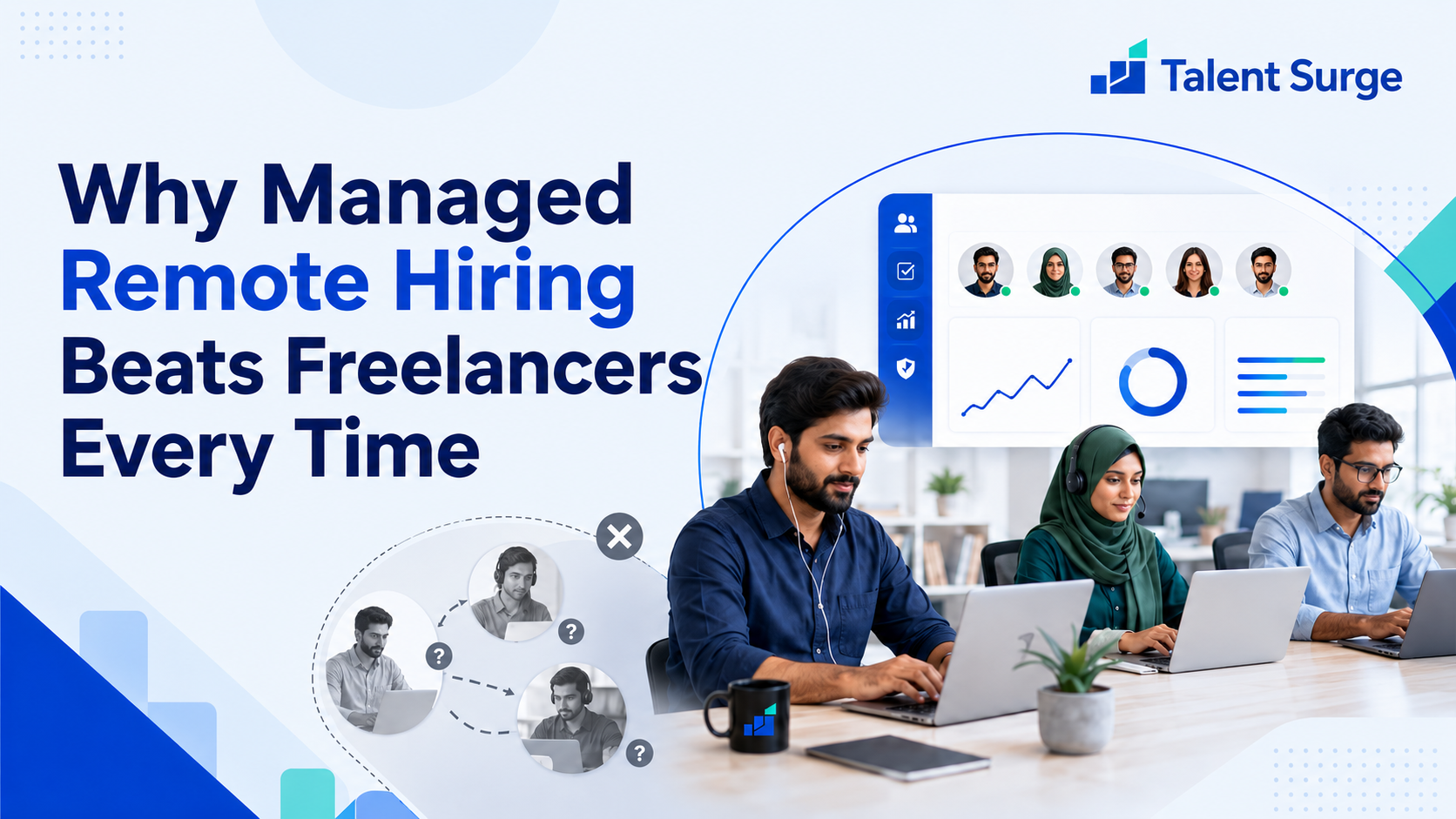
Why Managed Remote Hiring Beats Freelancers Every Time
Freelancers disappear. Managed remote staff don't. Here's the real difference for US businesses.
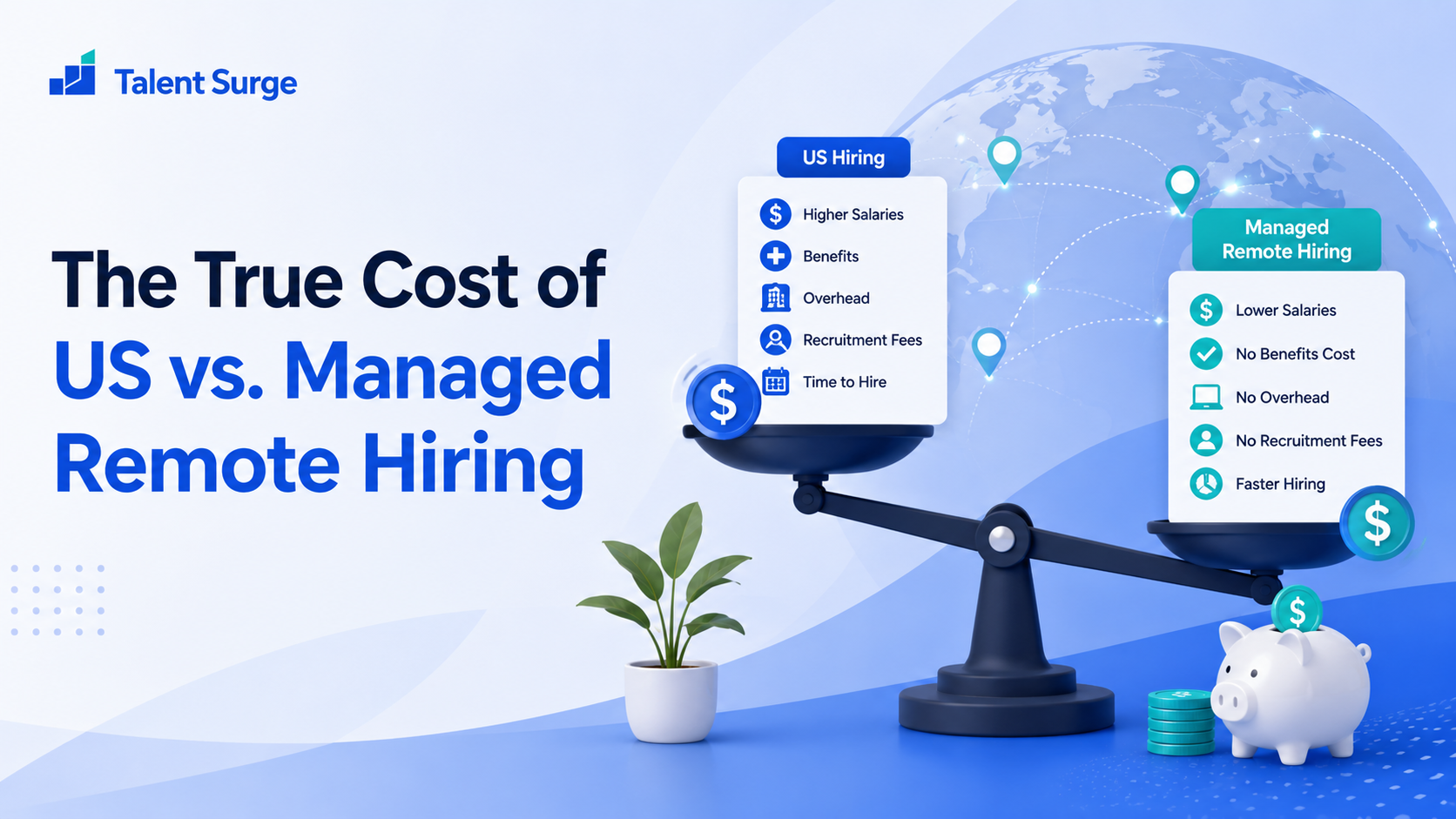
The True Cost of US vs. Managed Remote Hiring
The real cost of a US hire is salary plus benefits, taxes, recruiting, ramp, and management overhead. Here is the full math against a managed remote specialist.
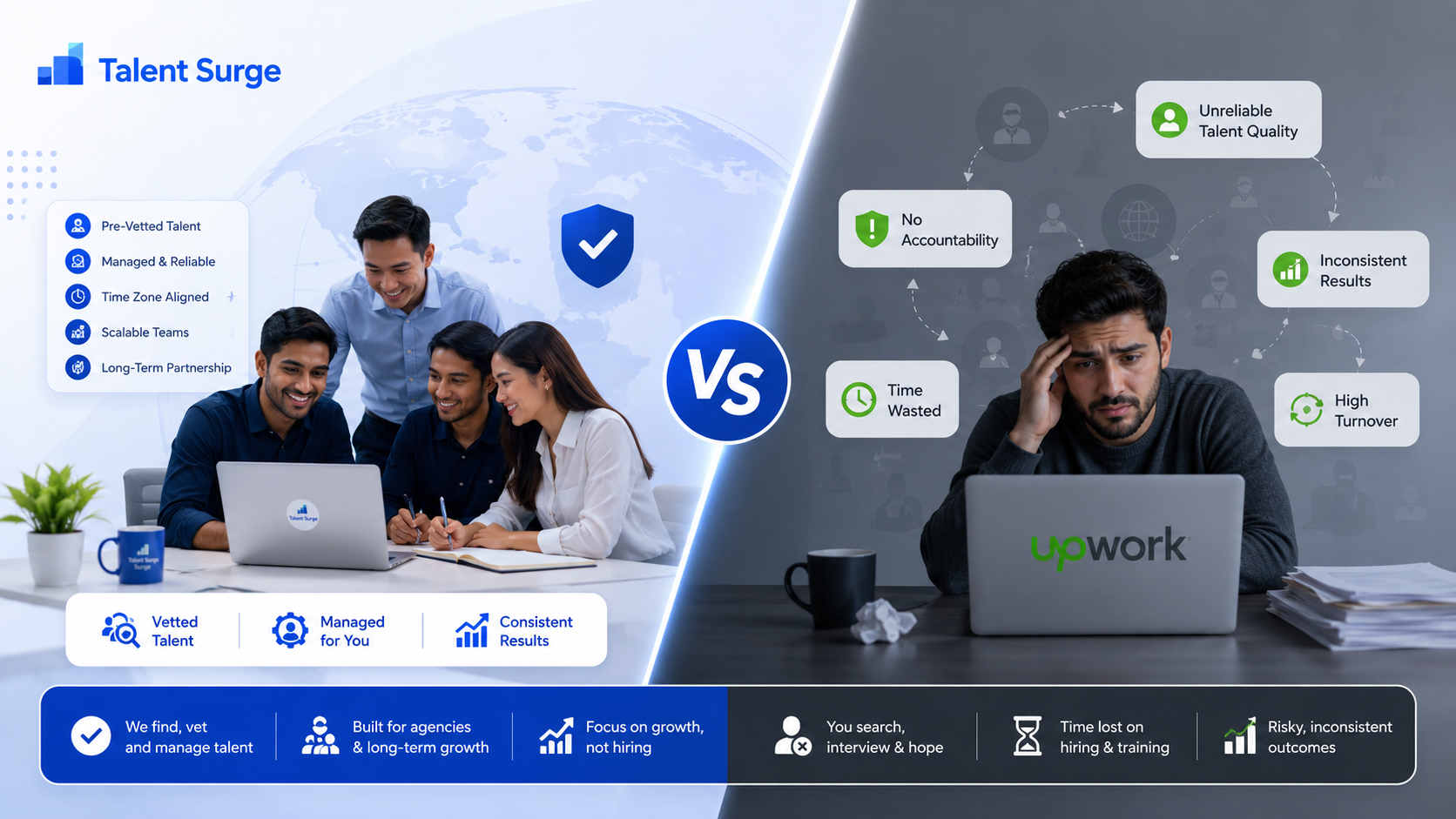
Talent Surge vs. Upwork: Why Agencies Are Switching to Managed Offshore Talent
Upwork is built for sourcing one-off work fast. Talent Surge is built for dedicated, managed specialists who stay. Here is the honest comparison of marketplace freelancers vs managed offshore talent, with cost math, risk, and when each one wins.