
Stop Paying for Travel Chaos: Hire an Executive Assistant to Own Business Trips End to End

On this page
- Why does this problem keep consuming executive time?
- What should you design before handing work to an executive assistant?
- How do you delegate without losing control?
- What does this look like in a real operating workflow?
- What is the practical setup checklist?
- Which approach protects executive capacity?
- What objections should you resolve before hiring?
- What is the bottom line?
- Frequently Asked Questions
- Sources and further reading
An executive assistant can remove business-travel chaos by owning the itinerary, confirmations, ground transport, meeting logistics, and change plan from one approved brief. Give the EA preferences, budget guardrails, traveler profiles, and escalation rules so they can solve routine changes without guessing on cost or risk.
Updated September 3, 2026. This guide is for leaders who need dependable executive support without blurring authority, security, or role boundaries. It explains the operating system to build before you hire, the work to delegate, and the objections worth resolving early.
Why does this problem keep consuming executive time?
Travel breaks down at the handoffs: a flight changes, the hotel is far from the meeting, a visa detail is missing, or a client dinner disappears from the itinerary. A scattered set of confirmations forces the traveler to become the coordinator when attention should be on the meeting. Executive attention is finite, and every avoidable coordination task competes with customer decisions, leadership, and focused work. An executive assistant creates leverage only when the work is made visible and repeatable.
That does not mean turning every interaction into a rigid script. It means deciding what good looks like, which exceptions need you, and how the assistant will show you progress. Talent Surge's virtual executive assistant role describes the core support areas, while this article focuses on the operating need.
What should you design before handing work to an executive assistant?
Start with a one-page operating brief. State the business goal, the people involved, the systems used, the response expectation, the authority the EA has, and the situations that must be escalated. Then write the workflow in plain language: collect traveler preferences and loyalty details through approved systems, confirm trip purpose and fixed appointments, compare options within budget, issue one mobile-friendly itinerary, and maintain a disruption checklist with airline, hotel, ground transport, and host contacts.
Readers often object that documenting a workflow takes longer than doing it themselves. That can be true once. But undocumented recurring work forces the same explanation repeatedly and makes a new assistant dependent on your memory. A short screen recording and a checklist are often enough for the first version.
How do you delegate without losing control?
Use staged delegation. First, let the EA observe and prepare drafts. Next, allow routine execution within a written rule. Finally, give authority for predictable exceptions only after review shows that the rule is working. This sequence preserves executive judgment while eliminating low-value coordination.
The EA can research and coordinate travel. The traveler or authorized approver should decide on out-of-policy spend, medical or immigration matters, personal travel changes, and commitments that affect a client contract. Use least-privilege access, multifactor authentication, and named accounts. Talent Surge's security guidance and vetting process are useful references when a workflow touches company systems or confidential information.
What does this look like in a real operating workflow?
A consulting partner traveling to a client workshop needs flights, hotel, car service, room setup, attendee confirmations, and a return buffer. An EA can consolidate these details and prepare the meeting pack, while the partner approves exceptions and client-facing commitments.
The important lesson is that an EA owns the process and the follow-through, not every decision inside the process. A clear owner for the final decision prevents the assistant from becoming a messenger between people who should be accountable directly.
What is the practical setup checklist?
- Document seat, hotel, dietary, accessibility, and loyalty preferences.
- Collect fixed meetings before booking travel.
- Set a travel budget and written exception approval path.
- Require one itinerary with confirmation numbers and local contact details.
- Create an incident plan for delays, cancellations, and missed connections.
Use the first month to improve the system, not to judge it from one unusual day. A short daily digest and a weekly review reveal recurring exceptions. Those exceptions are the raw material for better rules, templates, and escalation paths.
Which approach protects executive capacity?
| Operating choice | Practical result |
|---|---|
| Before departure | Checks documents, buffers, and logistics |
| During disruption | Uses a defined recovery plan |
| After travel | Organizes receipts and follow-ups |
What objections should you resolve before hiring?
"I cannot explain how I work." Start with one workflow, not your entire business. The assistant can help document it as they learn. "My work is too sensitive." Sensitivity is a reason for access controls and approval rules, not a reason to keep scheduling and chasing updates on an executive's desk. "I need someone who reads my mind." No hire can do that. A capable EA learns context faster when the CEO provides examples and timely feedback.
For a managed hiring path, review how Talent Surge's hiring process works, compare published options on pricing, and use the Cost Calculator to model your own workload. Those resources help you distinguish a defined operating need from a vague wish for more time.
What is the bottom line?
An executive assistant can remove business-travel chaos by owning the itinerary, confirmations, ground transport, meeting logistics, and change plan from one approved brief. Give the EA preferences, budget guardrails, traveler profiles, and escalation rules so they can solve routine changes without guessing on cost or risk. The right hire does not merely take tasks away. They create a reliable system for requests, decisions, and follow-through, leaving the executive responsible for the judgment that only the executive can provide.
Frequently Asked Questions
Can an EA book flights and hotels for me?
Yes, once you establish preferences, budget authority, and payment procedures. The assistant should present or book within approved guardrails and escalate exceptions.
What should be in a business travel itinerary?
Include every confirmation number, local time, addresses, ground transport, meeting contacts, flight details, hotel details, and a change-contact plan. One source of truth prevents avoidable searching.
Can a remote EA handle last-minute travel changes?
Yes, if they have approved tools, supplier contacts, and authority limits. The point is not to eliminate disruption but to make the recovery path clear before it happens.
Should an EA use my personal credit card?
Use your company-approved travel and expense process instead of casually sharing card details. Follow the payment controls that your business already requires.
Can an EA coordinate travel for several executives?
Yes, but establish traveler profiles and a clear priority order. Complex group travel may need dedicated operations support in addition to executive assistance.
How do I protect travel information?
Limit access to the information needed for the trip, use approved systems, and avoid sending identity documents through insecure channels. Talent Surge's security page outlines relevant managed-workplace controls.
Sources and further reading
- NIST Privacy Framework for risk-aware handling of business information.
- CISA guidance on multifactor authentication for account-access controls.
- Talent Surge team management for the managed support model.
Take action today
Stop comparing. Start saving.
US businesses save 60-70% vs local hires. Get 3 pre-vetted offshore specialists matched to your exact role delivered in 14 days, free with no commitment.
Keep reading
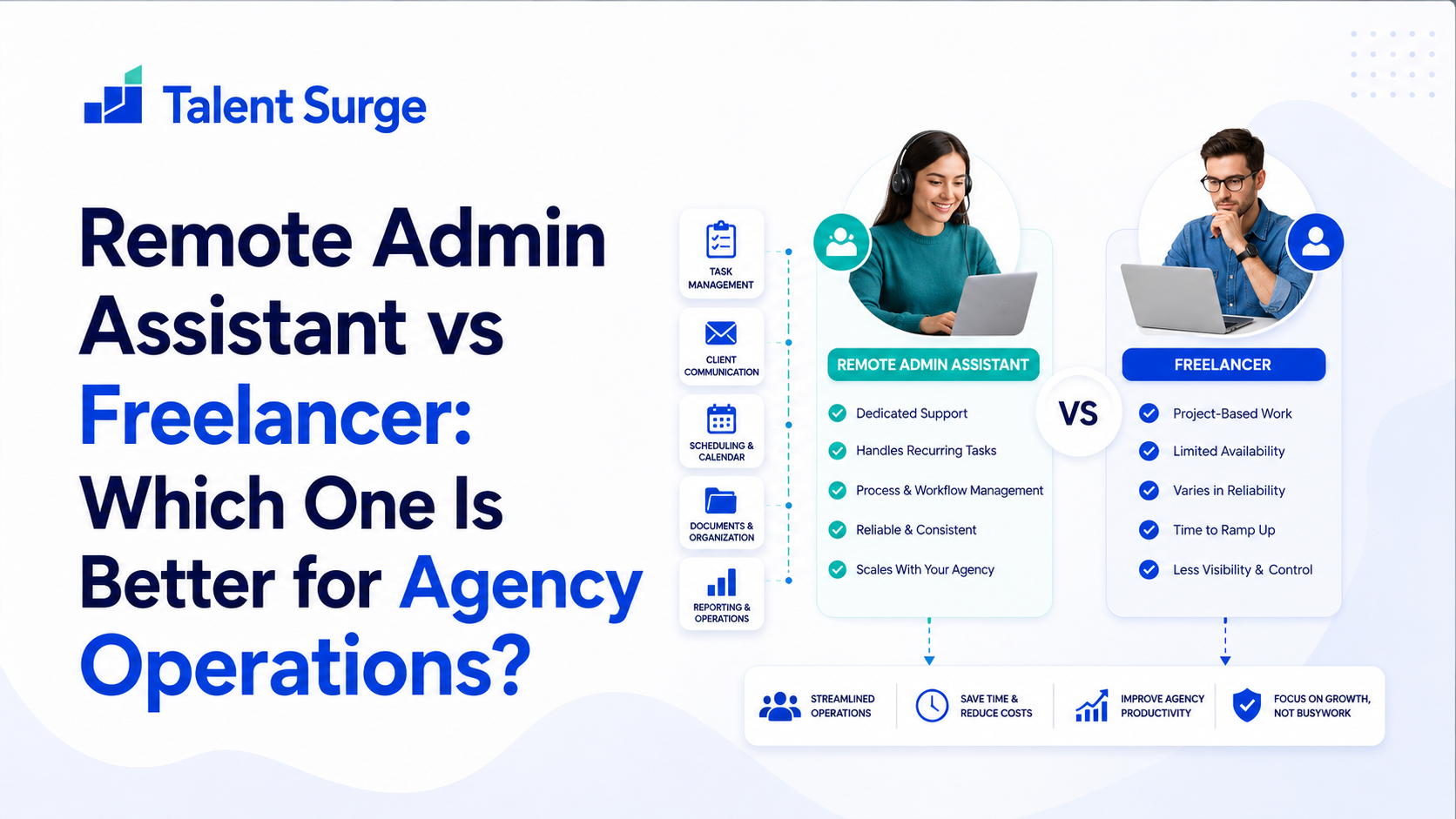
Remote Admin Assistant vs Freelancer: Which One Is Better for Agency Operations?
A freelance VA fixes admin overload temporarily. A managed remote admin assistant fixes it permanently, with dedication, security, and accountability built in. Here is the honest comparison.
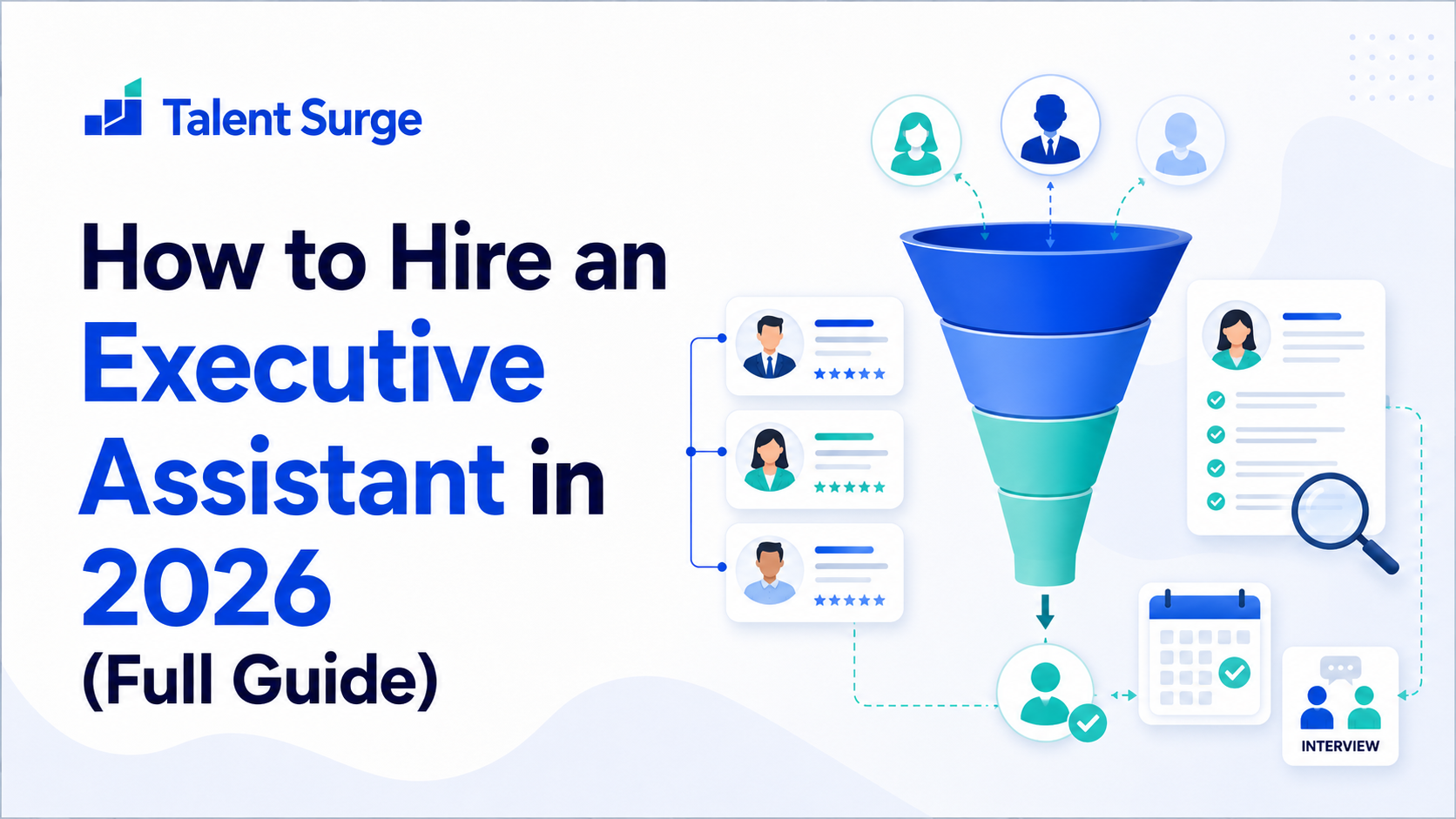
How to Hire an Executive Assistant in 2026 (Full Guide)
Hiring an executive assistant is one of the highest-leverage decisions a founder can make. Done well, it transforms how you operate. Here's the complete step-by-step guide for 2026.
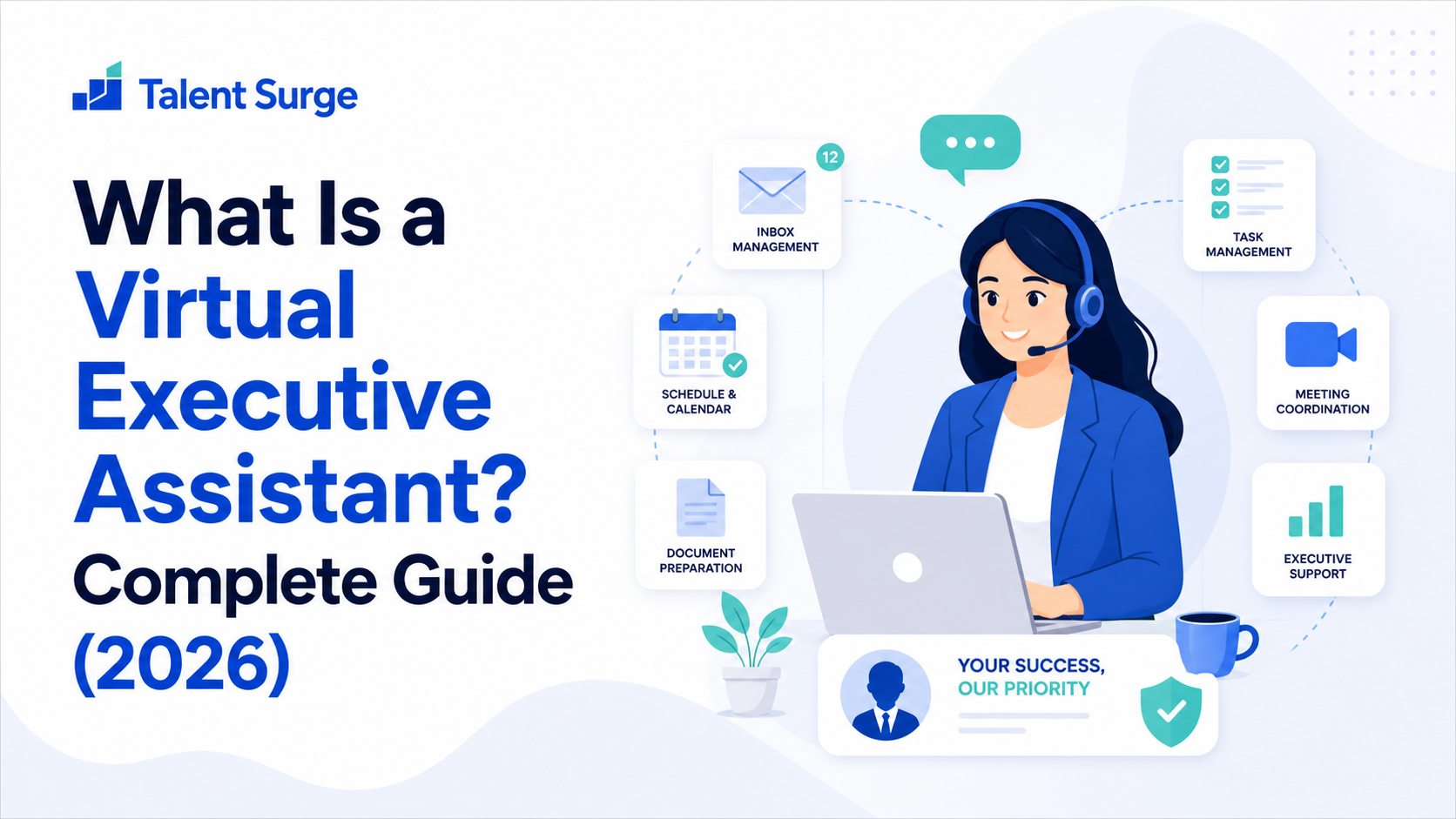
What Is a Virtual Executive Assistant? Complete Guide (2026)
A virtual executive assistant is the leverage tool high-performing executives are turning to in 2026. Learn what a VEA does, how they differ from regular VAs, and how to hire one.