
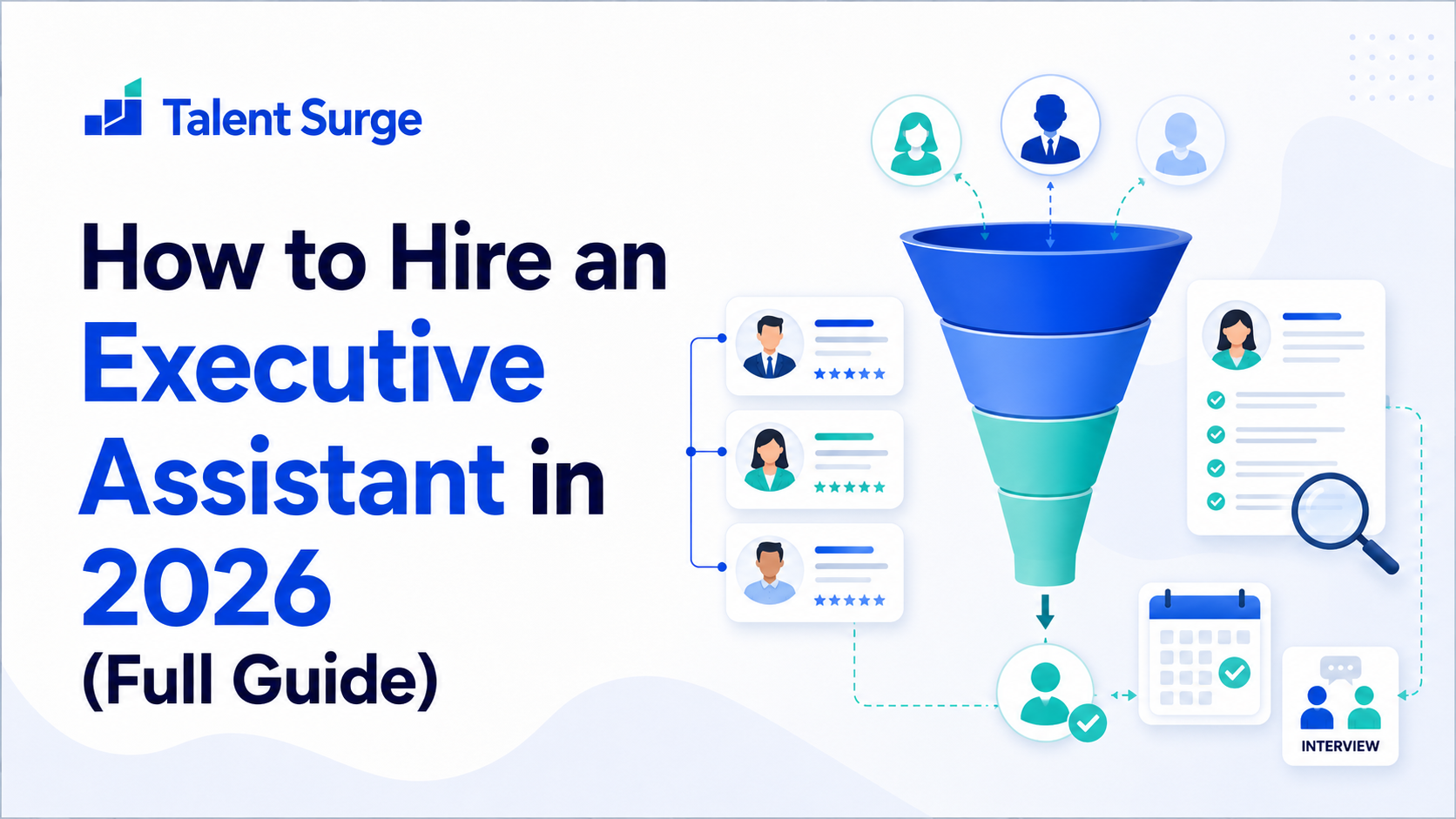
How to Hire an Executive Assistant in 2026 (Full Guide)
On this page
- Step 1: Define What You Actually Need
- Step 2: Write a Job Description That Attracts the Right Candidates
- Step 3: Decide Where to Source Candidates
- Step 4: Screen for These Non-Negotiable Qualities
- Step 5: Run a Structured Interview Process
- Step 6: Evaluate References Seriously
- Step 7: Onboard Them Properly
- How Much Does an Executive Assistant Cost in 2026?
- The Fastest Way to Hire an Executive Assistant in 2026
- FAQ
Hiring an executive assistant is one of the highest-leverage decisions a founder or executive can make, but only if you hire the right person, through the right process, with the right expectations in place.
Done well, it transforms how you operate. Done poorly, it creates more work than it solves.
This guide gives you a complete, step-by-step process for hiring an executive assistant in 2026, whether you're hiring in-house, remotely, or through a managed offshore partner.
Step 1: Define What You Actually Need
Before you post a job or contact a single agency, get clear on what you need. Most hiring mistakes happen here. Executives post generic job descriptions and end up with candidates who don't fit their actual working style.
Answer these questions first:
What tasks are consuming most of your time?
List every recurring task you do in a week that a skilled assistant could handle. Be specific. "Email management" is vague. "Triaging 150+ emails per day, drafting replies in my voice, and escalating urgent items" is actionable.
What hours do you need coverage?
Do you need someone in your timezone? Or are you comfortable with a slight overlap? This determines whether you hire locally, remotely, or offshore.
What tools do you use?
Your EA needs to be fluent in your stack from day one. List your calendar tool, email client, project management platform, communication tools, and CRM.
What's your budget?
Be realistic. A highly experienced executive assistant commands a premium. If budget is constrained, a managed offshore EA is almost always the smartest move. You get senior-level talent at 40-70% less than the equivalent US hire.
Step 2: Write a Job Description That Attracts the Right Candidates
A great executive assistant job description is specific, honest, and focused on outcomes, not just task lists.
Include:
- Your role and the company (brief, they're evaluating you too)
- Who they'll be supporting and at what level
- Specific responsibilities (not a generic list)
- Tools they must know
- Your expected communication style
- How success will be measured in the first 90 days
Avoid:
- Jargon and buzzwords ("rockstar," "ninja," "self-starter")
- Vague phrases like "fast-paced environment" without context
- Listing 40 responsibilities when you mean 10
- Undervaluing the role in compensation
Step 3: Decide Where to Source Candidates
Your sourcing channel determines the quality and speed of your hire. Here are your main options in 2026:
- LinkedIn: Good for in-house or senior remote hires. Slower process, high competition for top candidates, and you'll spend significant time screening.
- Job boards (Indeed, Glassdoor): High volume, low signal. Expect hundreds of applications with significant variance in quality. Best for junior roles, not senior EA positions.
- Freelance platforms (Upwork, Toptal): Reasonable for project-based or part-time support. Quality varies widely and you take on full management responsibility.
- Executive assistant agencies: Higher quality candidates, faster matching, but significant placement fees (often 15-25% of first-year salary) plus you still manage the relationship.
- Managed offshore partners: The highest ROI option for most executives. Companies like Talent Surge pre-vet, match, and fully manage your executive assistant. You get a dedicated, senior-level professional without the overhead of traditional hiring, at significantly lower cost.
Mid-article CTA: Want a dedicated virtual executive assistant placed in 14 days, fully managed? See how Talent Surge EA hiring works →
Step 4: Screen for These Non-Negotiable Qualities
Volume of applicants isn't the challenge. Identifying the right person quickly is. These are the traits that separate great executive assistants from adequate ones:
- Proactivity over reactivity. The best EAs don't wait to be told. They anticipate needs and act before problems arise. Ask for specific examples of when they've done this.
- Communication precision. Your EA will represent you in writing. Test their written communication during the hiring process. Look for clarity, tone-matching, and zero errors.
- Discretion under pressure. Executive assistants handle sensitive information daily. Ask directly how they've managed confidential situations in past roles.
- Systems thinking. Great EAs build systems so nothing falls through the cracks. Ask them how they currently organize their own work and their executive's priorities.
- Emotional intelligence. They're the buffer between you and the world. They need to read situations, manage difficult stakeholders, and stay calm under pressure.
Step 5: Run a Structured Interview Process
A two-stage process works best for EA hires:
Stage 1: Skills assessment (async)
Before any live interview, send candidates a short written test. Give them a realistic scenario: "Here are 5 meeting requests, 3 email threads, and a travel brief. How do you prioritize and handle them?" The quality of their response tells you more than an hour of interviews.
Stage 2: Live interview (60 minutes)
Spend 20 minutes on their background and specific past experience. Spend 30 minutes on scenario-based questions. Spend 10 minutes answering their questions. How they interview you is also data.
Key questions to ask:
- Walk me through how you manage an executive's inbox when they're traveling.
- Tell me about a time you had to push back on a request from your executive. How did you handle it?
- How do you decide what to handle yourself vs. what to escalate?
- What's your system for making sure nothing falls through the cracks?
- How do you handle two competing urgent priorities from the same executive?
Step 6: Evaluate References Seriously
Most hiring managers treat references as a formality. Executive assistant references are unusually revealing.
Call, don't email. Ask open-ended questions:
- "How did she/he manage your calendar during a particularly chaotic period?"
- "What types of tasks did you trust them with completely?"
- "Is there any area where they needed significant coaching?"
- "Would you rehire them immediately if given the chance?"
The last question is the most important. A hesitation on "would you rehire" tells you everything.
Step 7: Onboard Them Properly
A great hire fails without proper onboarding. Most executives underprepare here.
Week 1: Context and access. Grant access to all tools. Walk them through your calendar system, email preferences, and priority hierarchy. Share your working style preferences in writing.
Week 2: Shadowing and practice. Have them shadow your existing workflow without taking over. Let them draft responses you review before sending. Give rapid feedback.
Week 3: Increasing autonomy. Start releasing ownership of tasks. Define clearly what they can handle independently and what requires your input.
Week 4: Full operations. They should be operating independently with a weekly sync to align priorities.
A well-onboarded executive assistant is fully productive within 30 days. A poorly onboarded one takes 90+ days, or never clicks at all.
How Much Does an Executive Assistant Cost in 2026?
Costs vary significantly depending on your hiring model:
| Hiring Model | Annual Cost |
|---|---|
| US-based in-house EA (mid-level) | $65,000 - $90,000 + benefits |
| US-based remote EA (freelance) | $45,000 - $70,000 |
| EA staffing agency | $55,000 - $85,000 + placement fee |
| Managed offshore EA (e.g. Talent Surge) | $18,000 - $35,000 fully managed |
The offshore managed model consistently delivers the best value, not because the quality is lower, but because you're accessing elite talent from markets with lower cost of living, through a partner who handles all the management overhead.
The Fastest Way to Hire an Executive Assistant in 2026
If speed and quality are both priorities, and they usually are, the fastest path to a great hire is through a managed offshore partner.
Rather than spending 6-10 weeks posting, screening, interviewing, and onboarding, you work with a partner who has pre-vetted senior EA talent ready to match. Talent Surge can match you with a dedicated virtual executive assistant and have them fully onboarded within days, not months.
Learn more about Talent Surge's virtual executive assistant hiring process →
FAQ
What's the difference between an executive assistant and a virtual assistant?
A virtual assistant typically handles general administrative tasks at a task-execution level. An executive assistant operates at a higher level: managing priorities, exercising judgment, preparing executive-level communications, and coordinating across stakeholders. The EA acts as an extension of the executive, not just a task runner.
How long does it take to hire an executive assistant?
Through traditional channels, the full cycle (posting, screening, interviewing, offer, notice period, onboarding) runs 6-12 weeks. Through a managed offshore partner like Talent Surge, you receive 3 pre-vetted candidates within 14 days and can start work shortly after.
What should I pay an executive assistant in 2026?
US-based in-house EAs typically earn $65,000-$90,000 plus benefits. Managed offshore EAs through Talent Surge range from $18,000-$35,000 per year fully managed, including all HR, device, security, and oversight costs.
Can an offshore executive assistant handle sensitive information?
Yes. Talent Surge EAs sign NDAs before day one, work from company-secured devices in CISM-certified offices, and have screen monitoring active during work hours. Inbox and calendar access are managed through controlled credentials, not personal accounts.
End CTA: Ready to hire a virtual executive assistant the right way? Get 3 matched EA candidates from Talent Surge, placed in 14 days, managed from day one.
Take action today
Stop comparing. Start saving.
US businesses save 60-70% vs local hires. Get 3 pre-vetted offshore specialists matched to your exact role delivered in 14 days, free with no commitment.
Keep reading
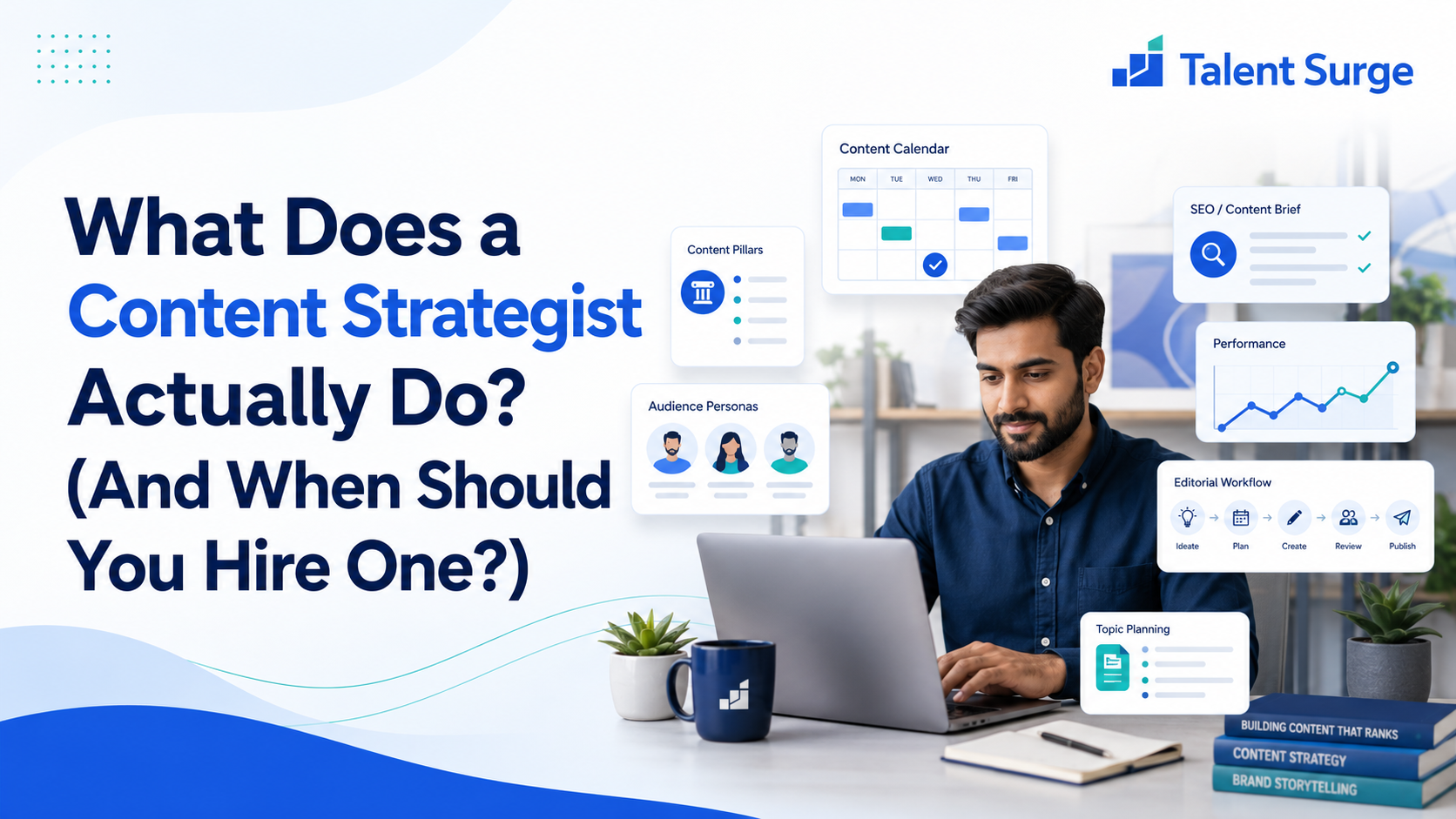
What Does a Content Strategist Actually Do? (And When Should You Hire One?)
A Content Strategist isn't just someone who plans blog posts. Here's what they own, what they deliver, and when you actually need one.
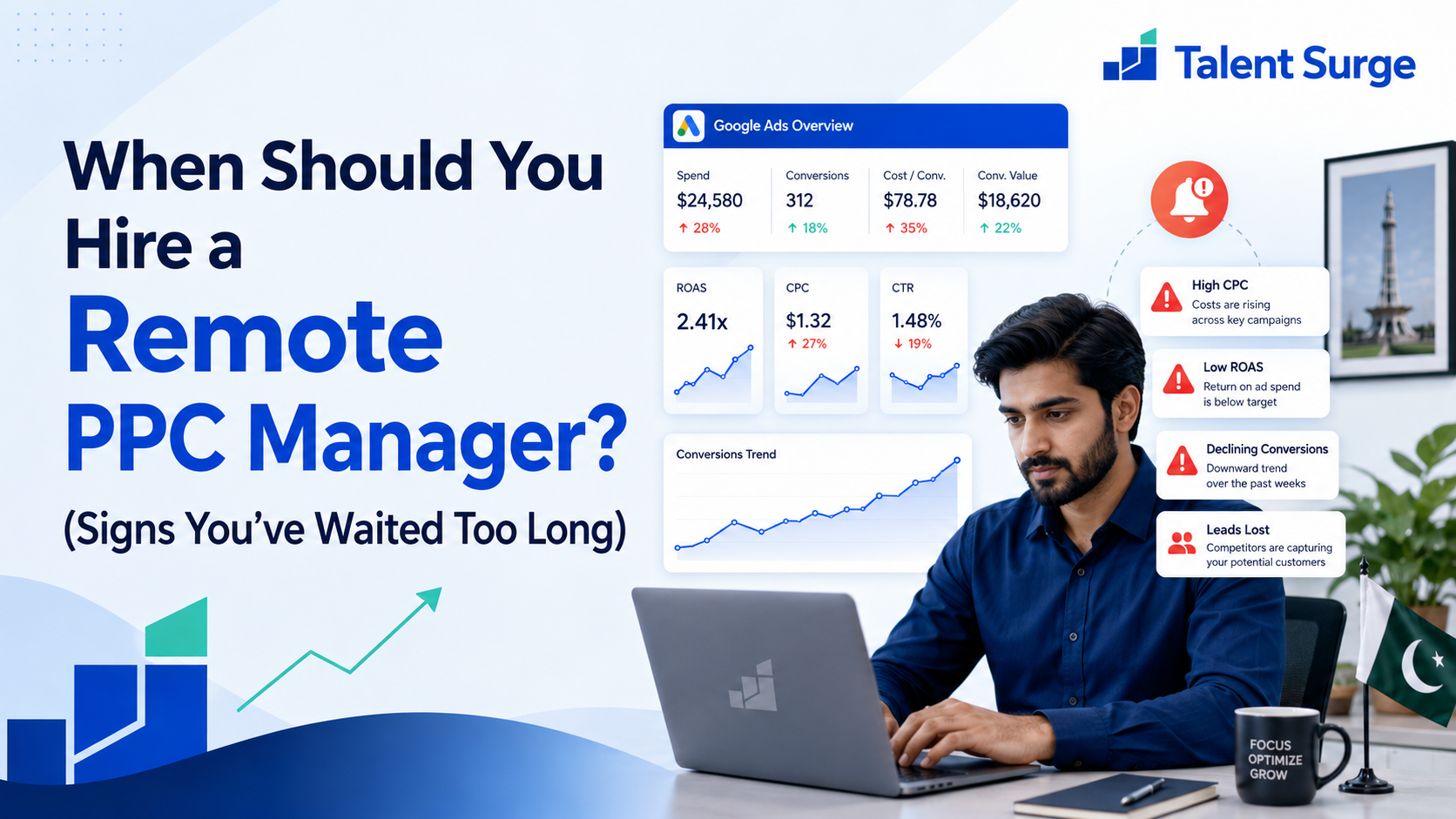
When Should You Hire a Remote PPC Manager? (Signs You've Waited Too Long)
If your Google Ads campaigns are set and forget, your CPL is climbing, and nobody is testing new angles you needed a PPC Manager yesterday.
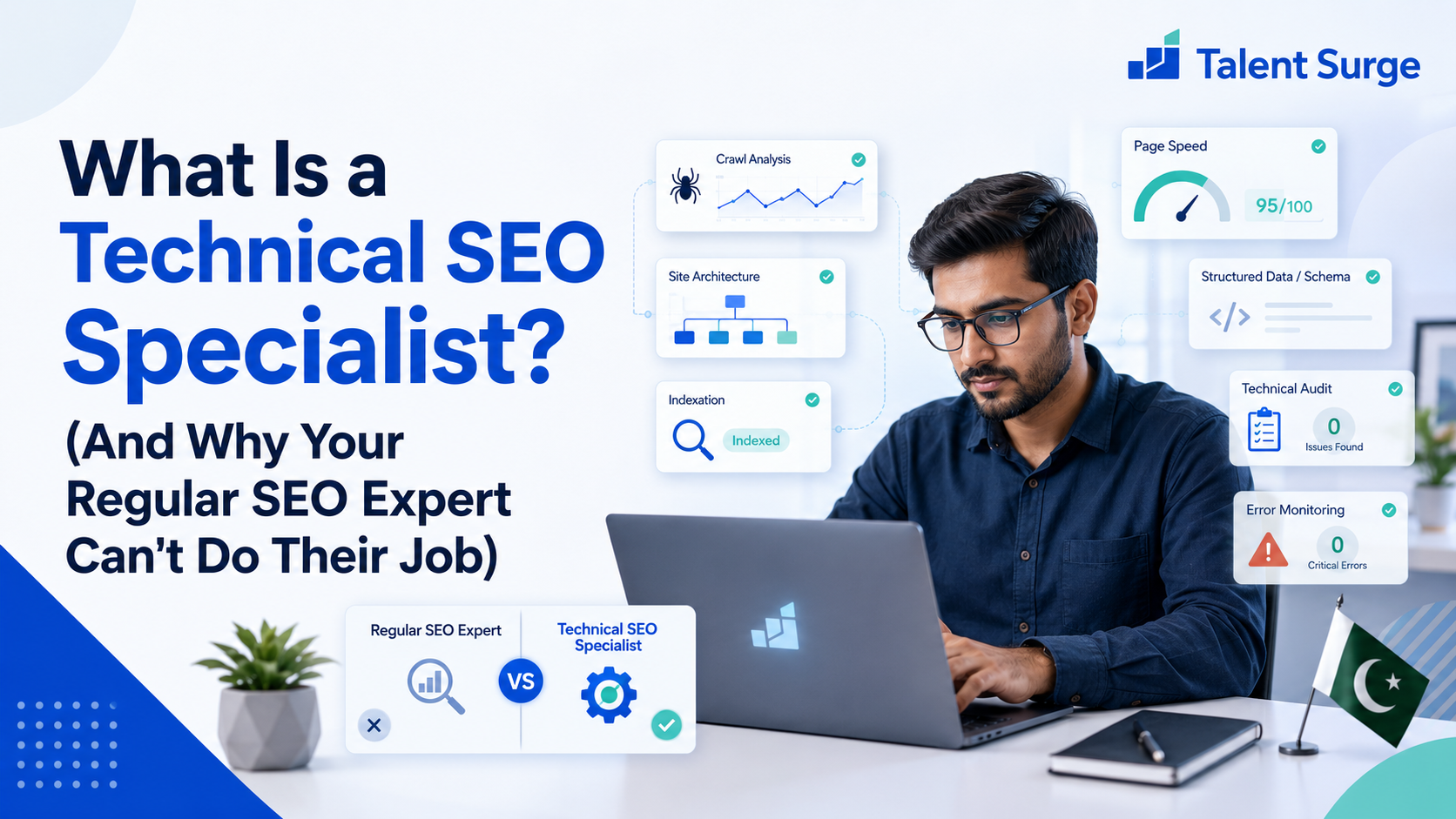
What Is a Technical SEO Specialist? (And Why Your Regular SEO Expert Can't Do Their Job)
Technical SEO is a separate discipline. Here's what a Technical SEO Specialist actually does and the problems only they can fix.