
How to Vet an Offshore Specialist: A 7-Step Checklist

On this page
- Key Takeaways
- Step 1: Confirm the Core Skill With a Test
- Step 2: Check Communication in Writing
- Step 3: Probe Real Experience With Scenarios
- Step 4: Verify Tools and Workflow
- What Each Step Reveals
- Step 5: Test Reliability and Responsiveness
- Step 6: Check References and Background
- Step 7: Confirm the Environment and Security
- The Bottom Line
- Frequently Asked Questions
Vetting is where good offshore hiring is won or lost. A polished resume tells you almost nothing about whether someone can do the work, communicate clearly, and show up reliably. A structured process tells you everything.
Use this seven-step checklist to evaluate any offshore specialist before you commit, whether you run it yourself or rely on a managed partner who runs it for you.
Key Takeaways
- A short, paid, realistic skill test reveals more than three interviews.
- Written communication quality predicts how smooth collaboration will be.
- Scenario questions separate real experience from rehearsed answers.
- Environment and security matter as much as skill for reliability.
Step 1: Confirm the Core Skill With a Test
Never hire on claims alone. Give a short, paid, realistic task that mirrors the actual work. A 60-minute test reveals more than three interviews and instantly separates the doers from the talkers.
Step 2: Check Communication in Writing
Remote work runs on clear writing. Review how candidates explain their thinking in messages and documents, not just on a call. Clarity here predicts smooth collaboration later and fewer misunderstandings across time zones.
Step 3: Probe Real Experience With Scenarios
Ask how they handled a specific past situation: a missed deadline, a difficult client, a tricky technical problem. Vague answers signal thin experience. Specific stories with real detail signal the real thing.
Step 4: Verify Tools and Workflow
Confirm hands-on experience with your actual stack. Ask them to walk through how they would set up or run a task in the tools you use day to day. Surface-level familiarity becomes obvious quickly.
Ready to build your offshore team? Tell us what you need and get 3 vetted candidates in 14 days, with no placement fees.
What Each Step Reveals
| Step | What it tells you |
|---|---|
| Skill test | Can they actually do the work |
| Written communication | Will collaboration be smooth |
| Scenario questions | Is the experience real |
| Tool verification | Can they hit the ground running |
| Reliability check | Will they show up |
| References | What past clients experienced |
| Environment and security | Is the setup safe and stable |
Step 5: Test Reliability and Responsiveness
Note how they handle the process itself. Do they reply on time, meet the test deadline, and follow instructions? How they treat hiring is how they will treat the job.
Step 6: Check References and Background
Talk to a past client or manager and confirm identity and work history. For sensitive roles, require an NDA and background screening before any access is granted.
Step 7: Confirm the Environment and Security
Where and how someone works matters. An office-based setup with managed devices beats an unmonitored home setup for both reliability and data security. See our vetting process and infrastructure standards.
The Bottom Line
Strong vetting is a sequence, not a single interview. Test the skill, read the writing, probe real scenarios, verify tools, check reliability and references, and confirm a secure environment. Run all seven and you remove almost all of the guesswork from offshore hiring.
Frequently Asked Questions
Can I trust a skills test result when hiring offshore?
A realistic, paid task that mirrors the real job is the most reliable signal you can get. Pair it with scenario questions to confirm depth.
How do I vet an offshore specialist's communication?
Review their written messages and documents, not just a call. Clear, structured writing predicts smooth async collaboration across time zones.
What questions should I ask when vetting offshore candidates?
Ask scenario questions about specific past situations: a missed deadline, a hard client, a tricky problem. Detailed answers reveal genuine experience.
Do I need to vet candidates myself?
Not if you hire through Talent Surge. We run structured, multi-layer vetting before you see anyone, so every candidate is pre-qualified. See the vetting process.
How important is the work environment when vetting?
Very. An office-based, managed setup improves reliability and data security compared with an unmonitored home office. See our infrastructure standards.
Want this done for you? Talent Surge runs a multi-layer vetting process so you only meet pre-qualified specialists. Start here or see the vetting process.
Take action today
Stop comparing. Start saving.
US businesses save 60-70% vs local hires. Get 3 pre-vetted offshore specialists matched to your exact role delivered in 14 days, free with no commitment.
Keep reading

Why Managed Remote Hiring Beats Freelancers Every Time
Freelancers disappear. Managed remote staff don't. Here's the real difference for US businesses.
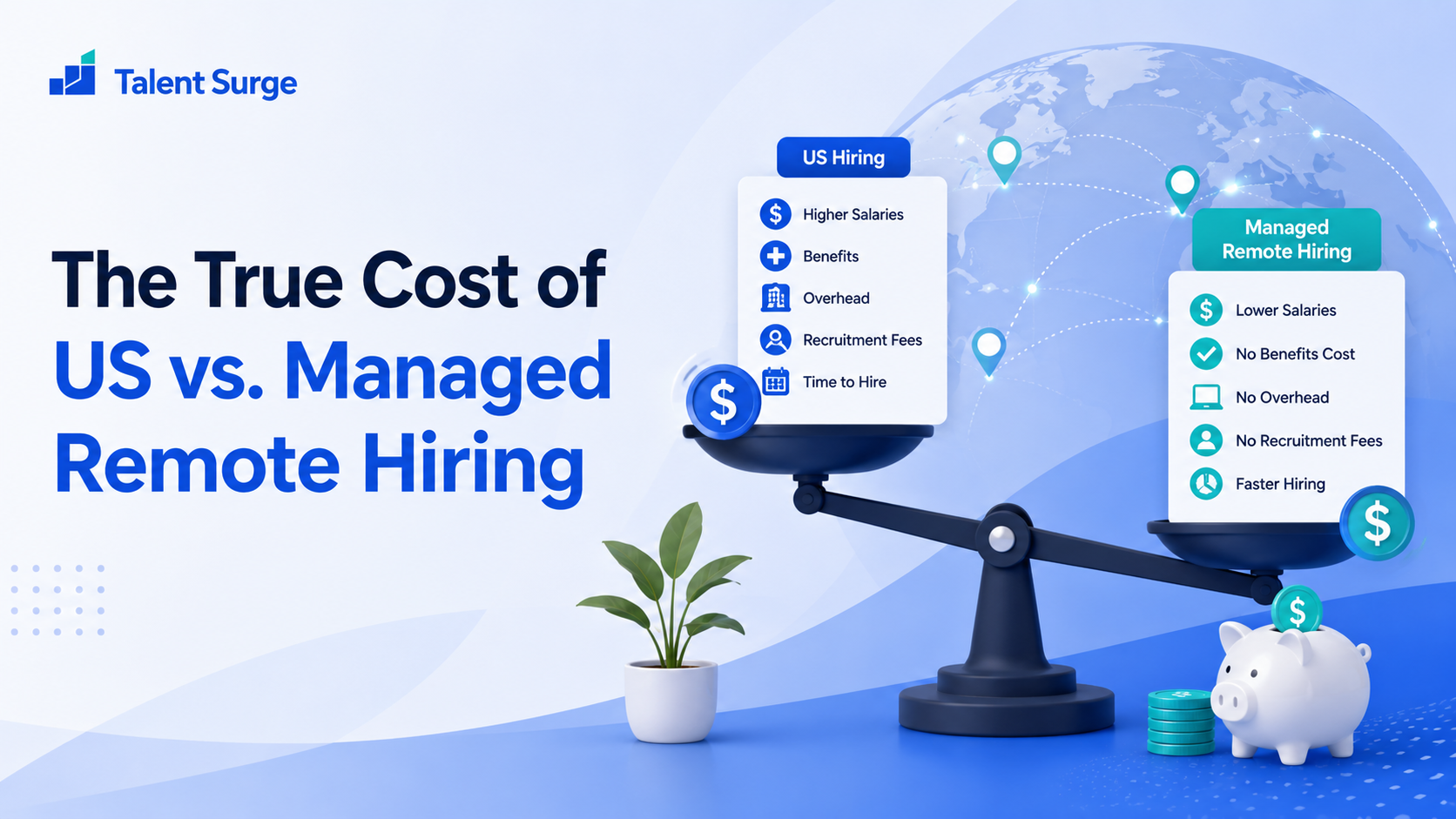
The True Cost of US vs. Managed Remote Hiring
The real cost of a US hire is salary plus benefits, taxes, recruiting, ramp, and management overhead. Here is the full math against a managed remote specialist.

Talent Surge vs. Upwork: Why Agencies Are Switching to Managed Offshore Talent
Upwork is built for sourcing one-off work fast. Talent Surge is built for dedicated, managed specialists who stay. Here is the honest comparison of marketplace freelancers vs managed offshore talent, with cost math, risk, and when each one wins.